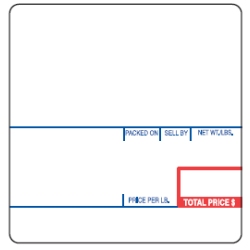
Nutrition Facts To Appear on Labels of Popular Meat and Poultry Products

There will soon be a new rule regarding an integral part of USDA’s efforts to educate consumers about nutrition. The U.S. Department of Agriculture’s Food Safety and Inspection Service (FSIS) announced recently that it will be making important nutritional information readily available to consumers on 40 of the most popular cuts of meat and poultry products. Under a new rule, packages of ground or chopped meat and poultry will feature nutrition facts panels on their labels. Additionally, whole, raw cuts of meat and poultry will also have nutrition facts panels either on their package labels or available for consumers at the point-of-purchase. The nutrition facts panels will include the number of calories and the grams of total fat and saturated fat a product contains. FSIS does not believe that it has underestimated the costs of the final rule. Since the Supplemental Proposed Rule Regulatory Impact Analysis was done, the total costs of labeling may have even decreased because of more cost-effective technology, such as less expensive computerized flexography and scale-label printers. The Continue reading

American’s Need To Eat More Fruits And Vegetables

There is no question that we all need to eat healthier and frequent our local farmers markets and produce stands so we can consume fresh fruits and vegetables. The following paragraph is from the latest government dietary guidelines.

The call to action, ultimately, Americans make their own food and physical activity choices at the individual (and family) level. In order for Americans to make healthy choices, however, they need to have opportunities to purchase and consume healthy foods and engage in physical activity. One way to do this is to ensure that all Americans have access to nutritious foods. Research has demonstrated that some Americans lack access to affordable nutritious foods. This lack of access makes it a challenge for many Americans to consume a diet consistent with the Dietary Guidelines for Americans, 2010. Thus, access may be Continue reading

New And Improved S2000Jr’s

After listening to your requests, CAS Corporation has added new features to the S2000 Jr Price Computing Scale for 2011 available now at the same low price as always. The new version of S2000 JR’s now available include the following features:

  • Weigh items in pounds, kilograms, or ounces
  • 36 direct speed keys added to pole models
  • VFD models now equipped with a rechargeable battery
  • Optional DEP-50 Receipt Printer now works with S2KJR

Proven Performer For Years

Sometimes there are ideas or reasons for changing what works. Maybe you are looking to improve a product or change something to lower the cost of an item. When it comes to the CAS LP1000 price computing scale with printer sometimes it is best to use the reliable proven scale. The LP1000 continues to be one of the more popular label printing scales on the market. Customers have been asking for this specific model for years. The scale is a very good scale and the labels are easy to purchase.

One note to consider, if you are just looking for a simple label with weight and price, you may want to consider something like the CAS S2000 JR price computing scale. However, if you are looking for a legal for trade printing scale that can print ingredients or have built in Price look ups, the LP1000 is the scale for you.

Storing Fresh Fruits and Vegetables

On this blog, we focus on scales for weighing produce. However, we also like to consume fresh produce and are always looking for ways to prolong the freshness of our favorite fruits and vegetables. We all like fresh produce, but how can we keep it fresh longer? ”How you store fruits and vegetables will impact how fresh your produce will stay,” says Erin Palinski, RD, a registered dietitian in private practice in northern New Jersey. Below are some food storage tips for common fruits and vegetables from Everyday Health.  Click the Everyday Health link to read the entire article.

Apples: At room temperature for up to seven days or refrigerated in a plastic bag if you won’t eat them that quickly.
Bananas: At room temperature, both ripe and unripe.
Grapefruit: At room temperature for one week or refrigerated for up to two or three weeks.
Peaches: At room temperature in a paper bag if unripe; remove from the bag when ripe and eat within a day or two. Continue reading

Certified Produce Scale

Many times when you think of a certified scale for produce you may think of hanging scales with a dial. While those do still exist, most of today’s sellers are opting to use the digital counter top scale to weigh produce and vegetables for their customers. It really makes sense. The prices are affordable and the scales are well built. Since most either come with rechargeable battery or operate on regular flashlight batteries, it really makes more sense than ever to go with the standard digital produce scale.

Certified Scales

Often consumers search for “certified scales” and they get lumped together with legal for trade NTEP Approved scales. Technically, a scale can be NTEP approved legal for trade and not be “certified”. Often times, the proper procedure for obtaining a “certified scale” is to do the following.

1. Buy a NTEP Approved Legal for Trade Scale. In most cases, you do not receive any paperwork saying your scale is “certified”. All you receive is your scale, with the certificate of conformance number (CoC#) stamped on the side of the scale.
2. Have the scale checked and calibrated in your store or at your produce stand, in other words in its final working location — by either a local scale company or the state weights & measures. At this point, in most cases, you receive paperwork showing the test results.
3. Have the state weights & measures come by and “certify” your scale and place their sticker on the scale.

So as you can see, in most cases you can search for and buy “certified scales” but they aren’t quite certified until you do a little homework upon receiving your scale.  The reason for this is simple. A scale can be NTEP approved and have a CoC# but that doesn’t mean it is 100 percent accurate. Perhaps the scale was calibrated in a different region of the country and gravity has changed just enough to throw the calibration off. Suppose the delivery company decided to use your scale as a football? That can very easily throw off the calibration of a scale. That is why it is always a good idea to buy your NTEP Approved “certified scale” and get it checked and calibrated locally to ensure you comply with your state regulations.

Commercial Scales for the Farmers Market Can Cost over $400

Legal for Trade Commercial scales can cost well over $400, but if you do a little research, you won’t pay near that much for a set of high quality farmers market scales.  Yes, you could get away with using a set of “household” scales, either hanging or digital, but that is ultimately not the way to establish trust and legitimacy with your customer who is buying produce from you.

Do some research and buy a legal for trade price computing scale that can be certified by the state.  In most states it is a requirement.  However, sometimes due to budget restraints and manpower, merchants get the idea that they can get away with not purchasing a legal for trade scale.  Sometimes every now and then you hear comments Continue reading

Label Printing Scales for sale

The CL5000 Label Printing Scale has the functions you need at an affordable price. Includes CL-Works software package. Use in supermarkets, specialty stores, deli’s and more! For a limited time, earn a $50 gift card for each label printing scale purchased. Contact Central Carolina Scale for more info.

Produce Safety is a must

Harmful bacteria that may be in the soil or water where produce grows may come in contact with the fruits and vegetables and contaminate them. Or, fresh produce may become contaminated after it is harvested, such as during preparation or storage. Eating contaminated produce (or fruit and vegetable juices made from contaminated produce) can lead to foodborne illness, which can cause serious – and sometimes fatal – infections. However, it’s easy to help protect yourself and your family from illness by following these safe handling tips for produce.